How To Understand Steel Gauges? A Practical Guide You'll Actually Use
- Share
- Issue Time
- Jul 25,2026
Summary
This article is the ultimate guide for steel purchasers and users, aiming to help readers fully understand the concept of "Steel Gauge" in the simplest and most understandable way possible.
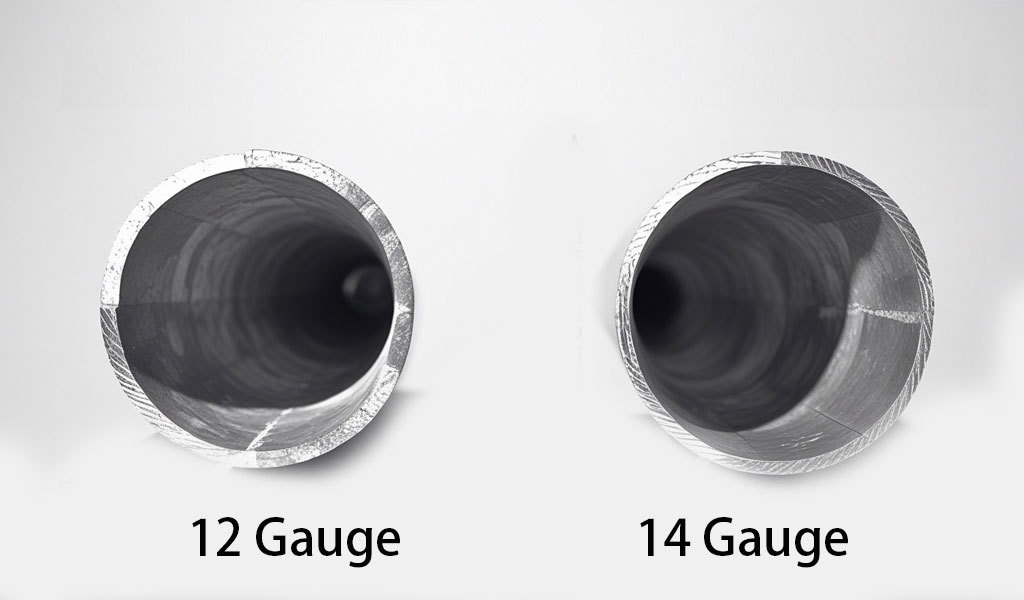
Overview
When you first start working with steel, you'll run into a number that seems a bit mysterious—like "12-gauge steel" or "16-gauge steel." It doesn't feel as straightforward as "millimeters" or "inches," and honestly, it can be confusing at first. Why does a bigger number mean thinner steel?
That confusion is completely normal. This guide is here to help. We'll walk you through what steel gauge actually is, where it came from, and—most importantly—how to read those charts and pick the right gauge for your project. By the end, you'll have a solid understanding that makes material selection feel a whole lot easier.
1. What Is A Steel Gauge?
A steel gauge (sometimes spelled "gage" or shortened to "GA") is simply a standardized way to measure the thickness of steel products—things like sheet metal, coils, wire, and SSAW pipe.
Here's the one thing you absolutely need to remember, because it feels backwards at first:
The higher the gauge number, the thinner the steel.
That's right. 10-gauge steel is actually thicker than 12-gauge steel. It's an inverse system—more on why that happened in a moment.
Steel sheet thickness generally ranges from 3GA (the thickest) down to 38GA (the thinnest). Once you lock that inverse relationship into your mind, you'll find it much easier to read spec sheets and talk with suppliers.
Key point: When someone says "lower gauge," they mean thicker, stronger steel. When they say "higher gauge," they mean thinner, lighter steel.
2. Where Did The Steel Gauge System Come From?
Curious about why this system seems so counterintuitive? It actually makes perfect sense once you know its origin.
The steel gauge system traces back to Britain's Industrial Revolution, specifically the iron wire industry. Back then, there was no standard unit for thickness like we have today. Wire drawers (the people pulling metal into wire) would measure diameter simply by counting how many times they pulled the wire through a die.
Each pull made the wire thinner. So if you pulled it 10 times, you got a certain thickness. If you pulled it 20 times, it was thinner. The number of pulls became the "gauge" number.
That's why a higher number means thinner material—it's literally counting the number of drawing passes. This practical system later carried over to sheet metal and other products, and it's stuck around ever since.
As for why we don't just use inches or millimeters everywhere? Those units became standard later, in the 19th century. By then, the gauge system was already deeply embedded in the trade. Today, both systems coexist—you'll often see gauge numbers alongside metric measurements on the same chart.
3. How To Pick The Right Steel Gauge For Your Project
Choosing the right thickness is about balancing strength, weight, and cost. Pick something too thick and you're wasting money and making fabrication harder. Pick something too thin and your part might fail.
Here's a simple rule of thumb:
| If you need... | Choose... | Example uses |
| Rigidity, edge strength, load-bearing | Thicker steel (lower gauge number) — like 10, 12, or 14 | Equipment housings, heavy brackets, trailer frames, structural parts |
| Flexibility, bending, forming, light weight | Thinner steel (higher gauge number) — like 18, 20, or 22 | Automotive panels, decorative parts, ductwork, enclosures |
Bottom line: Match the gauge to what your part actually needs to do. There's no "best" gauge—only the right one for your specific application.
4. How To Read A Steel Gauge Thickness Chart
This is where the rubber meets the road. Gauge charts are the practical tool you'll use over and over. Here's how to read them:
1 Find your material type at the top of the chart (Carbon Steel, Galvanized, Stainless, Aluminum, etc.).
2 Find your gauge number in the left column.
3 Read across to see the thickness in both inches and millimeters.
Critical warning: The same gauge number means different thicknesses for different metals. A 18-gauge steel is 1.214mm thick, but 18-gauge aluminum is only 1.02mm thick. Always use the chart for your specific material.
Below are the most common gauge charts you'll need.
4.1 Carbon Steel (Mild Steel) Gauge Chart
This is your go-to chart for general-purpose steel—structural parts, brackets, frames, and everyday fabrication.
| Gauge | Thickness (in) | Thickness (mm) |
| 3 | 0.2391 | 6.073 |
| 4 | 0.2242 | 5.695 |
| 5 | 0.2092 | 5.314 |
6 | 0.1943 | 4.935 |
7 | 0.1793 | 4.554 |
8 | 0.1644 | 4.176 |
9 | 0.1495 | 3.797 |
10 | 0.1345 | 3.416 |
11 | 0.1196 | 3.038 |
12 | 0.1046 | 2.657 |
13 | 0.0897 | 2.278 |
14 | 0.0747 | 1.897 |
15 | 0.0673 | 1.709 |
16 | 0.0598 | 1.519 |
17 | 0.0538 | 1.367 |
18 | 0.0478 | 1.214 |
19 | 0.0418 | 1.062 |
20 | 0.0359 | 0.912 |
21 | 0.0329 | 0.836 |
22 | 0.0299 | 0.759 |
23 | 0.0269 | 0.683 |
24 | 0.0239 | 0.607 |
25 | 0.0209 | 0.531 |
26 | 0.0179 | 0.455 |
27 | 0.0164 | 0.417 |
28 | 0.0149 | 0.378 |
29 | 0.0135 | 0.343 |
30 | 0.0120 | 0.305 |
4.2 Galvanized Steel Gauge Chart
Galvanized steel has a zinc coating for corrosion resistance. Because of that coating, a galvanized sheet of the same gauge is slightly thicker than bare carbon steel.
| Gauge | Thickness (in) | Thickness (mm) |
| 8 | 0.168 | 4.27 |
| 9 | 0.153 | 3.89 |
| 10 | 0.138 | 3.51 |
11 | 0.123 | 3.13 |
12 | 0.108 | 2.75 |
13 | 0.093 | 2.37 |
14 | 0.079 | 1.99 |
15 | 0.071 | 1.80 |
16 | 0.064 | 1.61 |
17 | 0.058 | 1.46 |
18 | 0.052 | 1.31 |
19 | 0.046 | 1.16 |
20 | 0.040 | 1.01 |
21 | 0.037 | 0.93 |
22 | 0.034 | 0.85 |
23 | 0.031 | 0.78 |
24 | 0.028 | 0.70 |
25 | 0.025 | 0.63 |
26 | 0.022 | 0.55 |
28 | 0.019 | 0.47 |
4.3 Stainless Steel Gauge Chart
Stainless steel offers high strength and corrosion resistance. Its gauge thicknesses are different from carbon steel, so always use this dedicated chart.
| Gauge | Thickness (in) | Thickness (mm) |
| 3 | 0.250 | 6.35 |
| 4 | 0.234 | 5.94 |
5 | 0.219 | 5.56 |
6 | 0.203 | 5.16 |
| 7 | 0.188 | 4.76 |
8 | 0.172 | 4.37 |
9 | 0.156 | 3.97 |
10 | 0.141 | 3.57 |
11 | 0.125 | 3.18 |
12 | 0.109 | 2.78 |
13 | 0.094 | 2.39 |
14 | 0.078 | 1.98 |
15 | 0.070 | 1.78 |
16 | 0.063 | 1.59 |
17 | 0.056 | 1.42 |
18 | 0.050 | 1.27 |
19 | 0.044 | 1.12 |
20 | 0.038 | 0.95 |
21 | 0.034 | 0.86 |
22 | 0.031 | 0.79 |
23 | 0.028 | 0.71 |
24 | 0.025 | 0.64 |
25 | 0.022 | 0.56 |
26 | 0.019 | 0.48 |
28 | 0.016 | 0.41 |
4.4 Aluminum Gauge Chart
Aluminum is lighter and softer, so its gauge system is different again. For example, 18-gauge steel is 1.214mm thick, but 18-gauge aluminum is only 1.02mm thick.
| Gauge | Thickness (in) | Thickness (mm) |
| 3 | 0.229 | 5.83 |
| 4 | 0.204 | 5.19 |
| 5 | 0.182 | 4.62 |
6 | 0.162 | 4.11 |
7 | 0.144 | 3.67 |
8 | 0.129 | 3.26 |
9 | 0.114 | 2.91 |
10 | 0.102 | 2.59 |
11 | 0.091 | 2.30 |
12 | 0.081 | 2.05 |
13 | 0.072 | 1.83 |
14 | 0.064 | 1.63 |
15 | 0.057 | 1.45 |
16 | 0.051 | 1.29 |
17 | 0.045 | 1.14 |
18 | 0.040 | 1.02 |
19 | 0.036 | 0.91 |
20 | 0.032 | 0.81 |
21 | 0.028 | 0.71 |
22 | 0.025 | 0.64 |
23 | 0.023 | 0.58 |
24 | 0.020 | 0.51 |
25 | 0.018 | 0.46 |
26 | 0.017 | 0.43 |
28 | 0.013 | 0.32 |
4.5 Brass & Copper Gauge Charts
These non-ferrous metals have their own thickness standards as well.
| Brass Gauge | Thickness (in) | Copper Gauge | Thickness (in) |
| 7 | 0.1443 | 7 | 0.180 |
| 8 | 0.1285 | 8 | 0.165 |
| 9 | 0.1144 | 9 | 0.148 |
10 | 0.1019 | 10 | 0.134 |
11 | 0.09074 | 11 | 0.120 |
12 | 0.08081 | 12 | 0.109 |
14 | 0.06408 | 14 | 0.083 |
16 | 0.05082 | 16 | 0.065 |
18 | 0.04030 | 18 | 0.049 |
20 | 0.03196 | 20 | 0.035 |
22 | 0.02535 | 22 | 0.028 |
24 | 0.02010 | 24 | 0.022 |
26 | 0.01594 | 26 | 0.018 |
28 | 0.01264 | 28 | 0.014 |
30 | 0.01003 | 30 | 0.012 |
5. Standard Gauges Comparison Chart (All Metals)
For quick reference, here's a side-by-side comparison of the same gauge number across different metals. Notice how the thickness varies significantly.
| Gauge | Carbon Steel (in) | Galvanized (in) | Stainless (in) | Aluminum (in) |
| 3 | 0.239 | — | 0.250 | 0.229 |
| 4 | 0.224 | — | 0.234 | 0.204 |
| 5 | 0.209 | — | 0.219 | 0.182 |
6 | 0.194 | — | 0.203 | 0.162 |
7 | 0.179 | — | 0.188 | 0.144 |
8 | 0.164 | 0.168 | 0.172 | 0.129 |
9 | 0.150 | 0.153 | 0.156 | 0.114 |
10 | 0.135 | 0.138 | 0.141 | 0.102 |
11 | 0.120 | 0.123 | 0.125 | 0.091 |
12 | 0.105 | 0.108 | 0.109 | 0.081 |
13 | 0.090 | 0.093 | 0.094 | 0.072 |
14 | 0.075 | 0.079 | 0.078 | 0.064 |
15 | 0.067 | 0.071 | 0.070 | 0.057 |
16 | 0.060 | 0.064 | 0.063 | 0.051 |
17 | 0.054 | 0.058 | 0.056 | 0.045 |
18 | 0.048 | 0.052 | 0.050 | 0.040 |
19 | 0.042 | 0.046 | 0.044 | 0.036 |
20 | 0.036 | 0.040 | 0.038 | 0.032 |
21 | 0.033 | 0.037 | 0.034 | 0.029 |
22 | 0.030 | 0.034 | 0.031 | 0.025 |
23 | 0.027 | 0.031 | 0.028 | 0.023 |
24 | 0.024 | 0.028 | 0.025 | 0.020 |
25 | 0.021 | 0.025 | 0.022 | 0.018 |
26 | 0.018 | 0.022 | 0.019 | 0.016 |
28 | 0.015 | 0.019 | 0.016 | 0.013 |
30 | 0.012 | 0.016 | 0.013 | 0.010 |
A quick note: The American Society for Testing and Materials (ASTM) mentions in specification ASTM A480-10a that the use of gauge numbers alone is not encouraged, because it's an older term with inconsistent meaning across materials. That's exactly why you should always use a chart with actual inch/mm measurements for your specific material.
6. Quick Reference: FAQ
Q1: How thick is 12 gauge steel?
About 2.66 mm (0.1046 inches)—roughly 7/64 of an inch.
Q2: How thick is 20 gauge steel?
About 0.91 mm (0.0359 inches)—roughly 3/80 of an inch.
Q3: Which is thicker—10 or 11 gauge steel?
10-gauge is thicker. Remember the inverse rule: smaller number = thicker material.
Q4: Which is thicker—14 or 16 gauge steel?
14-gauge is thicker. Again, the lower number wins for thickness.
Q5: Which is better—12 or 14 gauge steel?
That depends on your project. 12-gauge is thicker and stronger—better for structural or load-bearing parts. 14-gauge is thinner and more formable—better for bending and lighter applications. Choose based on what your part actually needs to do.
Q6: Is 10 gauge steel thick?
Yes, for sheet metal, 10 gauge (about 3.4mm) is considered thick and strong. For example, a door made from 10-gauge steel is over twice as strong as one made from 12-gauge, even though it's only 0.029 inches thicker.
Q7: Is 10 gauge steel strong?
Absolutely. In fact, 10-gauge steel is significantly stronger than 12-gauge—often more than twice as strong for certain applications like doors or enclosures. The added thickness pays off in durability.
Q8: Which is thicker—12 or 13 gauge steel?
12-gauge is thicker than 13-gauge. Same rule applies.
Q9: Which is Thicker :10 gauge vs 12 gauge steel?
10 Gauge is thicker than 12 gauge steel.
Q10: How To Understand : steel gauge vs mm?
One is the traditional thickness marking method, while MM is a new thickness marking method
Q11: Is GA same To gage?
Yes,gauge=GA=Gage.
Final Takeaway
Understanding steel gauge comes down to three simple things:
1 Higher gauge number = thinner steel. (It's inverse—get this right and you're 80% there.)
2 Same gauge, different metal = different thickness. Always use the chart for your specific material—don't assume.
3 Choose gauge by application. Need strength and rigidity? Go with a lower gauge (thicker steel). Need formability and light weight? Go with a higher gauge (thinner steel).
Keep this guide handy, bookmark the charts you use most, and you'll find that selecting the right steel thickness becomes second nature. Your projects deserve materials that fit—now you know exactly how to pick them.