Spiral Welded Pipe Advantages And Disadvantages
- Share
- Issue Time
- Jul 4,2026
Summary
For professionals engaged in pipeline engineering procurement and design, you need to quickly understand the applicable scenarios and limitations of spiral welded pipes to make selection decisions.
For professionals engaged in pipeline engineering procurement, design, and construction, you need to quickly understand the applicable scenarios and limitations of spiral welded pipes in order to make selection decisions. This article presents the advantages and disadvantages of spiral welded steel pipes from an objective factual perspective, providing comprehensive data support and basis for your pipeline engineering procurement and construction.
Spiral welded pipe (SSAW/HSAW) plays a very important role in the global pipeline market, with an estimated market size of 6.3 billion US dollars in 2024 and expected to grow to 8.1 billion US dollars by 2030.
What Is Spiral Welded Pipe?
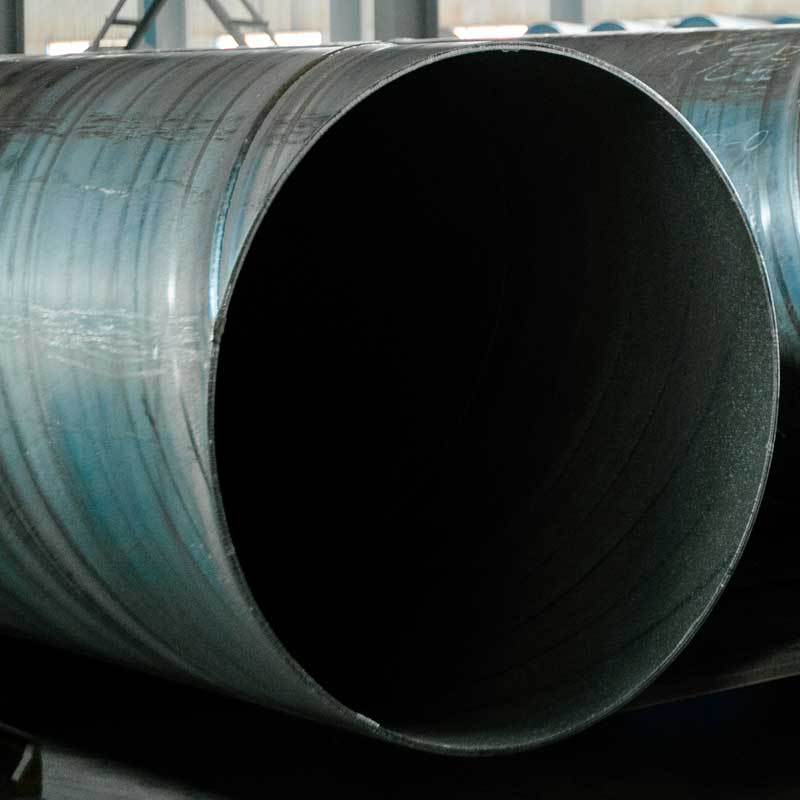
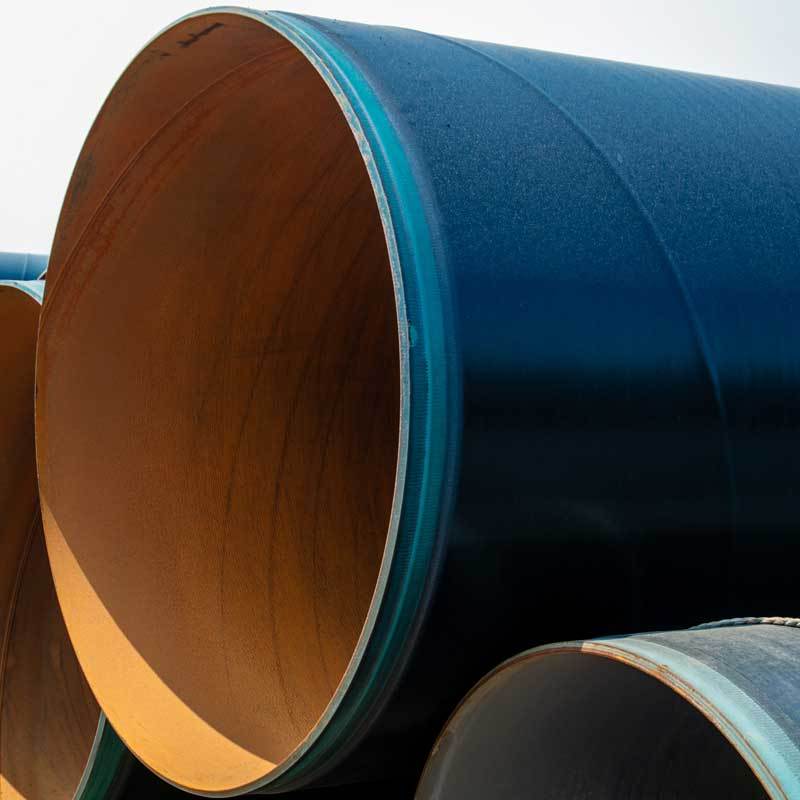
Spiral welded pipe is a steel pipe made by continuously curling steel strips at a certain spiral angle (forming angle) and using submerged arc welding technology to weld spiral welds.
Key points of production process: Steel strips of the same width can be adjusted to produce steel pipes of different diameters by adjusting the forming angle, which is their biggest process feature.
Core Advantages Of Spiral Welded Pipe
1. High Flexibility In Diameter Production
The same specification of steel strip can produce steel pipes with multiple diameter specifications, especially suitable for producing large-diameter steel pipes with narrower strip steel
Simply adjust the molding angle to switch product specifications, flexible for changing types, suitable for small batch orders of multiple varieties
2. Excellent Stress Performance
The spiral weld forms a certain angle with the direction of the main stress in the pipeline, and the weld can avoid the main stress, resulting in better stress conditions.
Under the same pressure conditions, the stress on the spiral weld is only 75% -90% of that on the straight seam welded pipe, and the thickness of the thin wall can be reduced by 10% -25% under the same outer diameter and pressure
3. Relatively Low Production Costs
The raw material used is hot-rolled steel coil, which is priced lower than the steel plate used for straight seam welded pipes, and the cost per ton of steel is about 100-200 US dollars lower
Continuous production is possible, theoretically capable of producing infinitely long steel pipes with minimal head and tail cutting damage, and a 6% -8% increase in metal utilization rate
The equipment is relatively lightweight and requires lower investment
4. Length Advantage
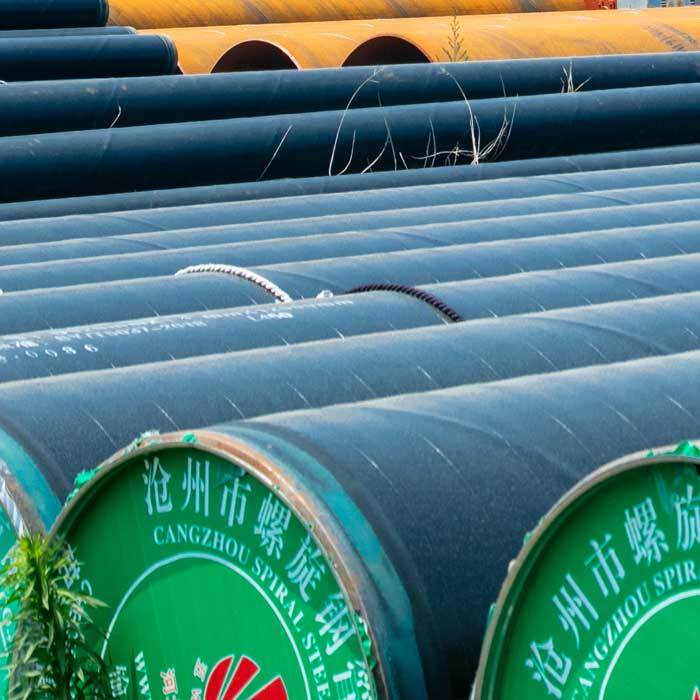
It can produce single steel pipes of 18 meters or even longer, and the forming length of Cangzhou spiral welded steel pipes can reach up to 30 meters. Compared with traditional 13 meter steel pipes, it can reduce the number of circumferential welds, improve pipeline safety and construction efficiency
Ultra long pipes have significant construction advantages in crossing projects and offshore projects
Disadvantages And Challenges Of Spiral Welded Pipes
1. The Length Of The Weld Seam Is Long, And The Probability Of Defects Is High
The length of spiral welds is much longer than that of straight welded pipes, and the probability of welding defects (cracks, porosity, slag inclusion, and welding deviation) increases accordingly
The welding stress of the weld seam is in a tensile stress state, which requires higher toughness of the weld seam
2. Relatively Low Geometric Dimension Accuracy
Early spiral welded pipes were criticized for their poor dimensional accuracy, especially the issue of pipe end ovality, and were considered only suitable for low-pressure water delivery applications
Modern high-quality spiral welded pipes have been greatly improved, but there is still a certain gap in pipe end roundness and wall thickness uniformity compared to straight seam welded pipes.
3. Complex Residual Stress Distribution
The residual stress distribution caused by the spiral forming process is more complex than that of straight seam welded pipes, which has a certain impact on the fatigue performance of the weld seam
4. Restrictions On Specific Application Scenarios
According to design specifications, traditional spiral welded pipes are usually only suitable for Class 3 and Class 4 areas (areas with low population density)
In high-risk environments such as acidic service environments (H ₂ S) and deep-sea pipelines, customers prefer to use straight seam submerged arc welded pipes (LSAW)
Compensating For Disadvantages And Technological Progress
The progress of modern technology: Modern spiral welded pipes from high-quality suppliers have reached the same quality as straight seam welded pipes, and have been widely used in X70 high-pressure gas pipelines in Canada and Europe
Breakthrough in the application of ultra long pipes: In 2022, 18 meter ultra long spiral submerged arc welded pipes were first applied in the field of oil and gas transportation pipes in China, and can be further promoted in the future
Ultra large caliber production capacity: By 2025, ultra large caliber spiral welded pipes with a diameter of 3400 millimeters have entered the mass production stage
Quality control technology improvement: automatic welding seam tracking, 100% non-destructive testing (UT/RT), water pressure testing and other methods effectively ensure the quality of welding seams
Conclusion and selection suggestions
Summary positioning: Spiral welded pipe is not synonymous with "low quality", but the optimal cost-effective choice in specific scenarios
Recommended Applicable Scenarios:
Large caliber (>24 inches) long-distance water, drainage, and mud conveying pipelines
Long distance onshore oil and gas pipelines (Class 3 and 4 areas)
Pile pipe, structural support pipe (wharf, bridge pile foundation)
Not recommended scenarios: deep-sea pipelines, acidic service environments, high-pressure gas pipelines in densely populated Class 1 and Class 2 areas (LSAW should be given priority in this case)
Need Help Selecting The Right Pipe For Your Project?
Our technical team can provide detailed comparisons and recommendations based on your specific pressure, diameter, and service environment requirements. [Contact us for a free consultation]